A printed part costs you material, machine time and your time. The material is easy to count in grams. The machine time covers the printer's wear and power. Your time is the slicing, the bed change, the support removal and the cleanup, and on a small part it is most of the cost. A good price covers all three, adds an allowance for prints that fail, and has a minimum so a single small part still pays.
- Price filament by the gram from what you pay. Prusa lists Prusament PLA at $29.99 for a 1 kg spool.
- Power is small: Prusa's MK4S page lists 80W on PLA settings, and the U.S. average commercial rate was 14.53 cents a kWh in July 2026.
- Machine wear is real. Spread the printer's price over the hours you expect it to print.
- Your time is most of the cost on small parts. Set a minimum and a setup fee per batch.
- Add a failure allowance, and a rush percentage when a job jumps the queue.
What goes into a 3D print
- Material. Filament or resin by the gram, including supports, brims and purge.
- Machine time. The printer's wear and parts spread over its printing hours, plus power.
- Labor. Checking the file, slicing, setup, removal, support cleanup and packing.
- Failures. Prints that fail and get reprinted, as a percentage on top.
- Finishing. Sanding, painting, inserts or assembly, by the hour.
- Overhead and profit. Rent, software, shipping supplies and what the business keeps.
Material by the gram
Divide the spool price by its grams. Prusa lists Prusament PLA at $29.99 for a 1 kg spool, which is about 3 cents a gram. Your slicer gives the grams for the part, supports included. Engineering materials cost more per gram and fail more often, so they carry a bigger failure allowance.
Machine time and power
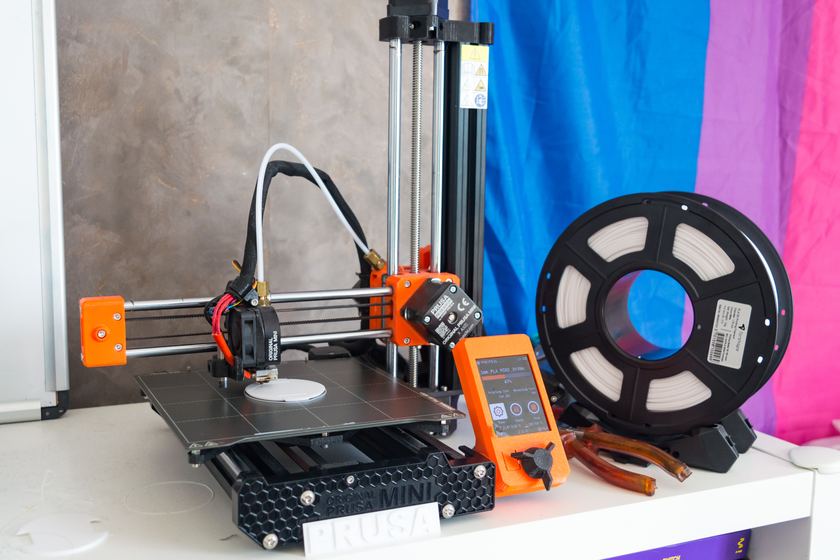
Spread the printer's price over the hours you expect it to print before it needs replacing or a rebuild. Prusa's MK4S product page lists the printer at $925 assembled. For the example below, assume 3,000 printing hours, about 31 cents an hour of wear.
Power is the smallest line. The same page lists power consumption of 80W on PLA settings, and the EIA average U.S. commercial rate was 14.53 cents a kilowatt hour in July 2026. Six hours at 80W is 0.48 kWh, about 7 cents.
Your time, the minimum and setup fees
Slicing, a bed change, support removal and cleanup take the same time for a small part as a big one. That is what a minimum charge is for. For runs, charge a setup fee per batch for the slicing, the test part and the bed setup, then a price per part. A rush percentage pays for jumping the queue.
Koira estimates carry a setup fee, a minimum charge and a rush percentage from your price list defaults, and they carry through to the invoice and the customer's page. Per part, per batch and per pound lines sit on the same price list.
A worked example: one printed part
Every input is an assumption for the example, except the filament price, the printer price and power, and the electricity rate, which come from the sources above.
- One PLA part, 120 grams with supports, printing for 6 hours.
- Filament at $29.99 a kilogram, about 3 cents a gram.
- Printer wear: $925 spread over an assumed 3,000 printing hours, about $0.31 an hour.
- Labor: half an hour at $30 an hour loaded.
- A 10% failure allowance on filament and wear, overhead 20% of the price and profit 15%.
- Filament, PLA: 120 g x $0.02999 a gram = $3.60
- Electricity: 6 hours x 0.08 kW x $0.1453 = $0.07
- Printer wear: 6 hours x $0.31 an hour = $1.86
- Labor: slicing, setup, removal and cleanup: 0.5 hours x $30 = $15
- Failed print allowance: 10% of filament and wear = $0.55
- Direct cost: $3.60 + $0.07 + $1.86 + $15 + $0.55 = $21.08
- Overhead plus profit: 20% + 15% = 35% of the price
- Price: $21.08 / (1 - 0.35) = $21.08 / 0.65 = $32
Check it: 35% of $32 is about $11, and $32 minus $11 is about $21, the direct cost of $21.08. The profit and overhead are inside the price, not added on top of a cost you guessed.
Notice where the money is: the half hour of your time is most of the cost, and the filament and the power together are under $4. That is why a minimum charge matters more than the price per gram.
Pricing laser engraving and cutting
Laser jobs are priced the same way: material if you supply it, machine minutes, your setup and artwork time, and a minimum. For items the customer brings, price the setup and the minutes, and say in writing that you are not responsible for items that react badly to the laser. Engraved items in quantity get a setup fee and a price per piece.
Paid at pickup or when it ships
When the job is done, mark it Ready. Koira texts the customer once that it is ready for pickup, or shipped, with the pay link, so most work is paid before it leaves the shop. On Grow the text goes from your Koira number; it waits in your quiet hours and never goes to someone who replied STOP.
Common 3D printing pricing mistakes
- Pricing by grams alone. Material is the smallest part of most small jobs.
- No failure allowance. Some prints fail. Price it in, more for difficult materials.
- Free slicing and setup. A minimum and a setup fee per batch cover it.
- Rush for free. Jumping the queue moves someone else's job. Charge for it.
Sources
Every published figure on this page was read on the source page itself on the date shown. Worked example inputs are assumptions, labeled as such.
- Prusa Research: Prusament PLA, checked October 10, 2026
- Prusa Research: Original Prusa MK4S 3D printer, checked October 10, 2026
- U.S. Energy Information Administration: Electric Power Monthly, Table 5.6.A, average price of electricity by sector, checked October 10, 2026
Questions contractors ask
How do I price 3D printing?
Add material by the gram, machine wear and power by the hour, your labor, and a failure allowance, then divide by one minus your overhead and profit share. Set a minimum for small parts.
How much does filament cost per gram?
Divide the spool price by its weight. Prusa lists Prusament PLA at $29.99 for a 1 kg spool, about 3 cents a gram.
How much electricity does a 3D printer use?
Prusa's MK4S page lists 80W on PLA settings. At the U.S. average commercial rate of 14.53 cents a kWh in July 2026, six hours costs about 7 cents.
Should a 3D print shop have a minimum charge?
Yes. Slicing, setup and cleanup take the same time for a small part as a big one, so a minimum keeps small jobs worth doing.
Shane Allen writes Koira's guides for trade business owners. How we check our numbers.