People planning an addition, a renovation or a small commercial build-out search for contractors near them, look at projects and read reviews for weeks. By the time they call, they have a shortlist. This guide covers how a small general contractor gets on it with a complete listing, project pages and a clear process.
- Google says local results come from relevance, distance and prominence. Profile, pages and reviews are yours.
- Additions, renovations, new construction and commercial work are separate searches.
- Explain your process: design, estimate, permits, schedule and communication.
- Project galleries of your own work carry more weight than anything else.
- Ask every client for a review when the project closes.
How Google decides which general contractors to show
According to Google, local results mostly come down to relevance, distance and prominence, also described as popularity: a good match for the search, a short distance from the searcher and a business people know.
Most general contracting buyers start with one of two searches: "General contractors near me", which Google answers with the map, or "Home addition cost", which it answers with web pages. Each is won a different way.
Three kinds of general contracting searches
| Search | The customer | What wins |
|---|---|---|
| General contractors near me | Building a shortlist | Listing, reviews, projects |
| Home addition cost | Researching | A page that explains price drivers |
| Commercial build-out contractor | Business owner | Commercial projects and process |
Shortlist searches go to the map and the first page. Project photos, recent reviews and how you describe your process decide who gets the call.
Cost searches are long research. Honest pages about what moves the price of an addition or renovation earn trust months before the meeting.
Commercial searches want proof of similar build-outs, how you handle schedules and inspections, and references.
When general contracting searches pick up
Searches follow the work. For general contractors, the busy stretch is late winter bidding through the fall building season, and it goes quiet in the coldest weeks, when sites slow down. Have the matching page and listing photos ready a few weeks before each busy month:
- January (get ready): design meetings and permit drawings
- February (get ready): bids for spring starts
- March (busy): foundations and framing begin
- April (busy): additions under way
- May (busy): framing, roofing and rough-ins
- June (busy): inspections and summer build-outs
- July (busy): finish work and new starts
- September (busy): getting dried in before winter
Step 1: the Business Profile
Before anything else, get three parts of the general contracting listing right:
- Real name only. Google does not allow extra information in the business name, and says doing it can get the profile suspended. "Lakeview General Contractor" is fine. "Lakeview General Contractor Home additions Whole-house renovations Near Me" is not.
- Few categories. Google asks you to use as few categories as possible to describe your core business.
- Service area, address hidden. Google says a service-area business should hide its address from customers. List the towns you really work, not every town you would drive to.
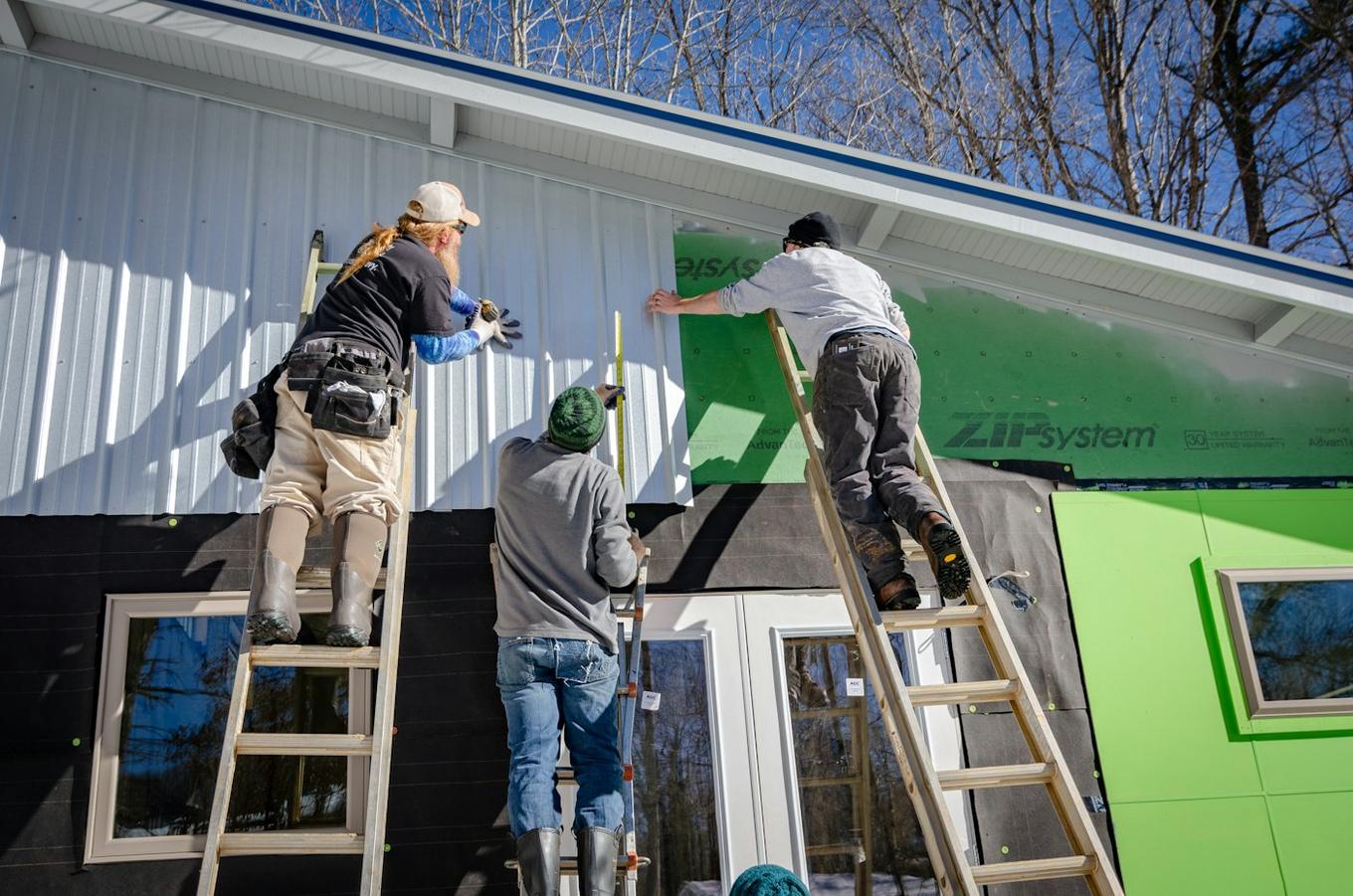
Finished projects inside and out, organized job sites with materials stacked and covered, framing stages and your team on site. Make sure the listing and your site say the same thing about your name, phone and hours. Koira keeps those details matching on Google and Bing for you.
Step 2: the pages a general contracting site needs
Most small general contracting sites have one page that lists every service. Google needs more than that to match the searches above.
- Additions. Design, permits, foundations and how the family lives through it.
- Whole-home renovations. Phasing, budgets and allowances in plain words.
- Kitchens and baths. Even as a general contractor, these are separate searches.
- New construction if you build, with the steps from lot to keys.
- Commercial build-outs. Schedules, after-hours work and inspections.
- Your process, from first meeting to final walk-through, and one page per town with a project from there.
Title each page with the service and the town, like "Second-story additions in Valrico, FL | Lakeview General Contractor", and write for the customer, not for a keyword count. Google's starter guide calls keyword stuffing a breach of its spam policies. Koira writes a page for every town you work and every service you offer, from your business and price list.
Step 3: every finished job is proof
Each finished project is a monthly post: the town, the scope, the timeline and photos at a few stages. It keeps your site and profile fresh and lets future clients see how you work, not just how it ended.
No time to write? Koira turns your job photos into a monthly post on your site.
Step 4: reviews from every job
Prominence, Google says, partly comes from how many sites link to you and how many reviews you have. Buyers of general contracting read reviews closely, so every new one helps twice: once with Google and once with the person deciding.
Google says offering incentives, like free or discounted goods or services, in exchange for reviews is strictly prohibited. Asking only happy customers, or steering people away from negative reviews, is against Google's Maps policy.
- Ask everyone, not only the happy ones, right after payment.
- Reply to every review and mention the project and the town. Future clients read your replies to see how you handle problems on long jobs.
- Stuck on a reply? The free review reply generator writes one from templates.
Koira sends the ask an hour after the invoice is paid and drafts the reply.
Check where you stand
See how your listing, reviews and site compare with other general contractors nearby in about a minute, free.
Step 5: links you already have a reason to get
Google's local ranking page counts links from other websites toward prominence. Useful links for a general contractor: the local builders association, architects and designers you work with, suppliers that list contractors, and subcontractors you trade referrals with.
What to skip
- Anyone promising page one. Google says there is no way to request or pay for a better local ranking.
- Fake offices. A virtual office, meaning a rented address you do not work from, is not eligible for a Business Profile under Google's guidelines.
- The keywords meta tag. The keywords meta tag does nothing for Google Search, according to its own starter guide.
How to tell if it is working
- Calls, website clicks and direction requests from your Business Profile, by month.
- Requests for home additions and whole-house renovations that came from your site.
- Reviews per month compared with jobs finished.
- Where each booked general contracting job came from.
Compare season to season, not week to week. Google's starter guide says some changes show in a few hours and others take several months. Koira's reporting shows dollars paid on jobs Koira touched first, next to what Koira cost.
Paid leads alongside SEO
SEO takes months; some weeks you need calls now. Google lists "General contractor" for Local Services Ads, which charge per lead and sit above the map. See general contracting leads: where to buy them and how to need fewer, and general contracting marketing ideas for the rest of the plan.
Where Koira fits
You can do all of this yourself. Koira exists for the general contractors who would rather not: it builds the site and its pages, keeps listings in sync, asks for every review and posts your finished jobs. Office is free for the site, estimates and invoices, and Grow adds the receptionist and text-back for $249 a month plus usage at cost. See pricing or how a general contracting company runs on Koira.
Questions contractors ask
How do general contractors rank higher on Google?
Verify your Business Profile, add project pages with your own photos, explain your process, and ask every client for a review when the job closes.
Should general contractors publish price ranges?
Ranges and the things that move them help clients who are still researching. Firm numbers come after a visit and a scope.
How long does construction SEO take to work?
Google's starter guide says some changes show in hours and others take several months. Big projects are researched slowly too, so judge it over a few seasons.
Can I give a discount for a Google review?
No. Google says offering incentives, like free or discounted goods or services, in exchange for reviews is strictly prohibited.
Sources
- Google Business Profile Help: Tips to improve your local ranking on Google, checked October 9, 2026
- Google Business Profile Help: Guidelines for representing your business on Google, checked October 9, 2026
- Google Business Profile Help: Manage your service areas, checked October 9, 2026
- Google Business Profile Help: Tips to get more reviews, checked October 9, 2026
- Google Maps user contributed content policy: prohibited and restricted content, checked October 9, 2026
- Google Search Central: SEO Starter Guide, checked October 9, 2026
- Koira: pricing, checked October 9, 2026
- Local Services Help: Getting started with Local Services Ads (United States), checked October 9, 2026