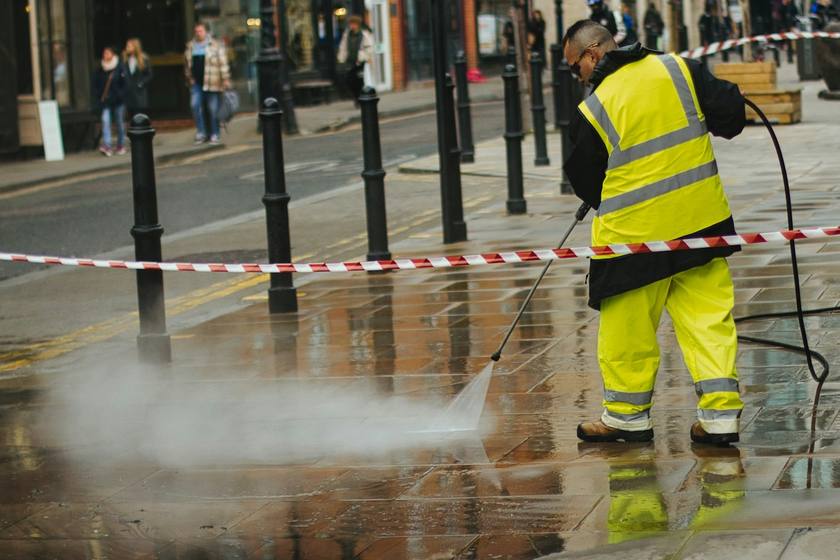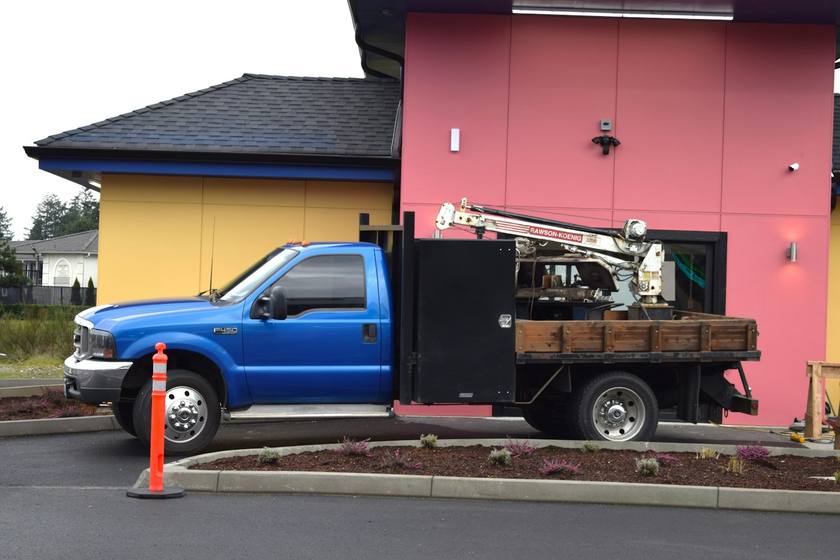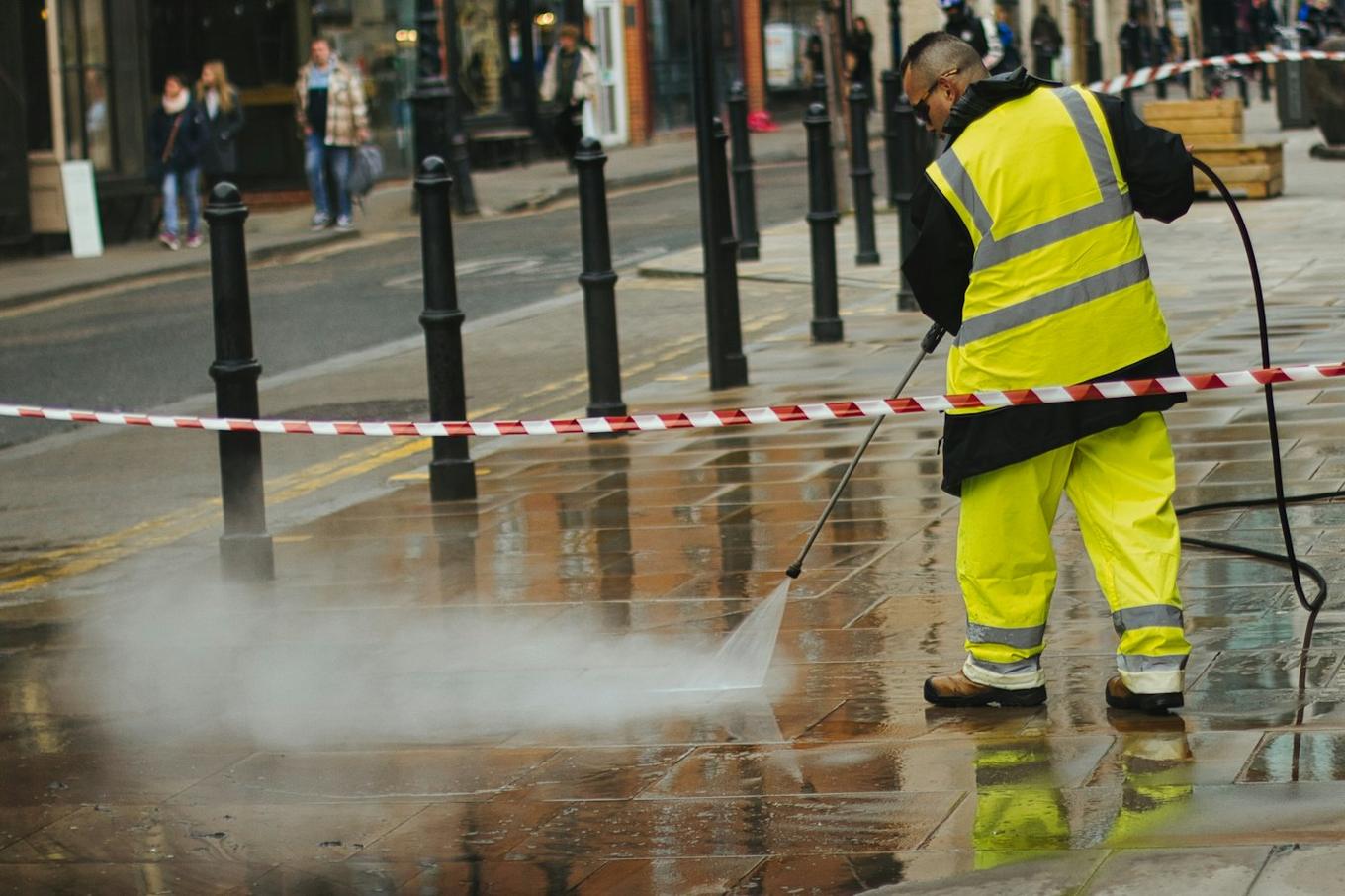
A pressure washing business can be running within weeks: a machine, a surface cleaner, hoses, a truck or trailer and a phone. That low bar is why the trade is crowded, and why prices in some areas are pushed down by people who have not counted their costs. This guide covers the steps that make it a real business: picking services, the paperwork and insurance, wash water, equipment, pricing, first customers and repeat work.
- Start with flat work and house washing, then add roofs, storefronts and commercial work once you have the equipment, insurance and experience.
- Wash water is a pollution question. EPA says storm sewers often carry runoff untreated into local waters, so ask your city what you may let into a drain.
- Price from your own costs. Thumbtack's 2026 guide lists $75 to $90 an hour on average and $241 to $418 per job nationally, checked October 8, 2026.
- Before and after photos are your best marketing. Use them on your site, your Google listing and cards to the neighbors.
- Repeat work is the business: house washes yearly, storefronts monthly, driveways every season.
1. Pick your services
Pressure washing covers very different jobs, with different risks and equipment.
| Service | Method | Start with it? |
|---|---|---|
| Driveways, walks, patios | Pressure, surface cleaner | Yes |
| House washing | Low pressure | Yes, with training |
| Decks and fences | Low pressure, care | After practice |
| Roofs | Low pressure, ladders | Later |
| Storefronts, lots | Pressure, hot water | Later |
Flat work (driveways, sidewalks, patios) is the easiest place to start: simple, visible, and hard to damage if you use a surface cleaner. House washing calls for care: too much pressure can damage siding or windows, so learn a low-pressure method before you sell it. Roofs add ladder work and fall protection; leave them until you have the training and the insurance for them. Commercial work (storefronts, dumpster pads, parking areas, drive-thrus) often runs at night and may need hot water equipment.
Residential work gives you volume and reviews. Commercial work gives you repeat contracts. Many owners start residential and add a few storefronts.
2. Register, license and set up taxes
The U.S. Small Business Administration's business guide (sba.gov, checked October 8, 2026) lists the launch steps: choose a structure, choose a name, register, get tax IDs, apply for licenses and permits, open a business bank account and get insurance.
- Structure and name. Sole proprietor or LLC; a name people can say on the phone and find on Google.
- Licenses. Usually a general business license, but some cities and states have rules for mobile washing, wash water or chemical use. Ask your city or county.
- EIN. The IRS says you generally need one to hire employees or run a partnership or corporation, and that it is free from the IRS (irs.gov, checked October 8, 2026).
- Taxes. The IRS lists the self-employment tax rate as 15.3% (12.4% Social Security, 2.9% Medicare) and says you may need to pay estimated taxes quarterly. Income tax is on top. Set aside a share of every payment.
- Bank account. Separate from day one.
3. Insurance before the first job
Pressure washing breaks things: a window, a light fixture, a car finish hit by overspray, a plant killed by runoff. The SBA's insurance page lists general liability insurance, which it says protects against financial loss from bodily injury, property damage and similar claims (checked October 8, 2026). It also says businesses with employees must carry workers' compensation, unemployment and disability insurance, and that some states require more.
Tell your agent exactly what you do. Roof work, chemical use and commercial lots can change what a policy covers. Ask about commercial auto if you tow a trailer or carry a skid unit. Keep a certificate of insurance ready; commercial clients ask for it before they let you on a property.
4. Handle wash water properly
Wash water carries dirt, oil, grease and cleaning chemicals. EPA's stormwater page says polluted stormwater is commonly carried through municipal storm sewers and then often discharged, untreated, into local water bodies, and that, to prevent harmful pollutants from being washed or dumped into those systems, certain operators must get permits and run stormwater programs (epa.gov, checked October 8, 2026). In plain words: the drain at the end of the driveway often leads straight to a creek.
- Ask your city's stormwater or public works office what you may and may not let into a storm drain, and whether they need you to collect wash water on commercial jobs.
- Use the least chemical that does the job, and read every label.
- On commercial jobs such as restaurants, dumpster pads and gas stations, expect to block drains and recover water.
- Protect plants from runoff, especially when you use cleaning chemicals.
5. Equipment checklist
No total here: prices vary widely by brand, size and whether you buy new or used. Price your own list with a local supplier.
- A pressure washer sized for the work. Flow (gallons per minute) matters as much as pressure for cleaning speed.
- A surface cleaner for flat work.
- Hoses, a hose reel, quick connects, nozzles and spare parts like O-rings.
- A low-pressure setup for chemicals if you will wash houses.
- Ladders, and fall protection if you will work on roofs.
- A water tank if you cannot rely on the customer's spigot.
- Safety gear: eye protection, gloves, chemical-resistant boots, hearing protection.
- A truck or trailer to carry it all, secured.
6. Price for profit
Build your price from your own costs: your time (and any helper's), chemicals, fuel and drive time, equipment wear, insurance and overhead, then profit. For a wage reference, the BLS May 2025 survey puts the national mean wage for cleaners of vehicles and equipment at $17.78 an hour (bls.gov, series 53-7061, checked October 8, 2026). Remember that drive time, setup and teardown are not billable.
Then compare with the market. Thumbtack's 2026 power washing guide lists a national average of $75 to $90 an hour and $241 to $418 per job, with a low-end average of $166 to $189 (thumbtack.com, checked October 8, 2026). Fixr's driveway page lists $0.30 to $0.40 per square foot for pressure washing a driveway (fixr.com, checked October 8, 2026).
Set a job minimum so a small job covers the drive and setup. Our guide to pricing pressure washing works through a full example, and the free profit margin calculator checks your margin.
Offer three options on each estimate, such as driveway only, driveway and walks, and driveway, walks and house wash. Our guide to good, better, best estimates shows how.
7. Your first customers
- Photos first. Wash your own driveway, a friend's, a relative's. Take before and after photos from the same spot. That is your portfolio.
- Google. A Google Business Profile with your real business name, services, hours and those photos, and a review from every customer. Koira asks for the review an hour after the invoice is paid.
- A price on your site. Most pressure washing can be priced without a visit. Koira measures driveways and roofs from satellite images and prices from your own list, and the customer books on the same page. The site is on the free Office plan.
- The neighbors. A clean driveway next to a dirty one sells itself. Koira mails cards with your before and after to nearby homes the morning after a job.
- Storefronts. Property managers need the same wash on many properties. Koira's commercial outreach writes to them (Front Office plan).
To see how your business looks online today, get the free AI report and check that your listings match your site.
8. Turn jobs into repeat work
A house wash is often needed again in a year, a driveway every season, a storefront monthly. Ask every customer if they want to be on a schedule. Offer a yearly house wash or a seasonal flat work plan, billed on the card on file. Koira's maintenance plans are sold on your site and invoices and book the visits when due (Front Office plan).
9. Get paid on the spot
Most pressure washing jobs are small and done in one visit, so collect before you leave. With Koira the invoice goes out when you tap done and the customer pays by card, phone wallet or QR code at the door. Take a deposit on big commercial jobs with a signed estimate. On the free Office plan, Koira keeps 2% of each card payment, plus Stripe's processing. See pricing.
10. Growing past one truck
Raise prices when you are booked more than a couple of weeks out. Add a helper, then a second rig. Track which services and neighborhoods pay best, and lean into them. For the general steps, read how to start a home services business, and see how a pressure washing company runs on Koira.
Questions contractors ask
Is a pressure washing business profitable?
It can be if you price from your real costs, set a job minimum and build repeat work. It loses money when prices are copied from the cheapest competitor without counting drive time, chemicals and equipment wear.
Do I need a license to start pressure washing?
Usually a general business license, but some cities and states have rules on mobile washing, wash water and chemical use. Check with your city or county.
Can I let pressure washing water go down the storm drain?
Ask your city. EPA says storm sewers often carry runoff untreated into local waters, and that certain operators must run stormwater programs to keep harmful pollutants from being washed or dumped into them. Your city can tell you its rules for wash water.
How much should I charge for pressure washing?
Start from your own costs and minimum. For comparison, Thumbtack's 2026 guide lists $75 to $90 an hour and $241 to $418 per job on average, and Fixr lists $0.30 to $0.40 per square foot for a driveway, both checked October 8, 2026.
Can I use full pressure on a house?
Be careful. Too much pressure can damage siding and windows. Learn a low-pressure method, and read the label of every cleaning product, before you sell house washing.
What insurance does a pressure washing business need?
General liability at minimum, and tell your agent about roof work, chemicals and commercial jobs. The SBA says businesses with employees must also carry workers' compensation, unemployment and disability insurance.
How do I get my first pressure washing customers?
Before and after photos, a Google Business Profile with reviews, an instant price on your website, and cards to the neighbors of every job.