Lawn care is one of the most common first businesses in the trades, and for good reason. The skills are learnable, customers need you every week or two for most of the year, and you can start small. It is also a business where it is easy to stay busy and still not make money, usually because prices are too low and the stops are too far apart. This guide covers how to start in a way that avoids both.
- Start with mowing, edging and blowing, then add cleanups, aeration and beds. Check your state's rules before you apply any pesticide.
- Do the paperwork in the SBA's order: structure, name, registration, tax IDs, licenses, a bank account, then insurance.
- Price per visit from your own costs. LawnStarter puts a typical mowing visit at $44 to $71 nationally, checked October 8, 2026.
- Route density is profit. Ten yards on one street beat ten yards across the county.
- Recurring customers billed on the card on file are the business. Turn every one-time cut into a weekly or every-two-weeks slot.
1. Decide what you will offer
| Service | How often | Notes |
|---|---|---|
| Mow, edge, blow | Weekly or every 2 weeks | The core route |
| Cleanups, leaves | Spring and fall | Bigger tickets |
| Aeration, overseeding | Once or twice a year | Rent or buy equipment |
| Mulch, beds, hedges | Seasonal | Good upsells |
| Fertilizer, weed control | Several times a year | Check state rules first |
Mowing is the base: weekly or every two weeks through the growing season. LawnStarter notes the season runs about 24 weeks in the Northeast and about 45 in the Southeast (lawnstarter.com, checked October 8, 2026), so where you live shapes your whole year. In short seasons, plan for fall cleanups, leaves and possibly snow removal to fill the gap.
Add-ons like cleanups, aeration, mulch and hedge trimming raise the value of each customer and fill the shoulder seasons.
Residential or commercial. Homes give you many small, recurring customers. HOAs, property managers and commercial sites give you bigger contracts with more paperwork and larger equipment. Most new owners start residential.
2. Pesticides and fertilizer: check the license first
Treating lawns for weeds and pests is where licensing usually comes in. EPA's page on pesticide applicator certification (epa.gov, checked October 8, 2026) says restricted use pesticides are not available to the general public and may only be bought and applied by certified applicators or people under their direct supervision. It says state pesticide regulatory agencies issue certifications, that all 50 states, the District of Columbia, four tribes, six territories and five federal agencies administer certification programs, and that in some states certification is required for all commercial applicators, including those who use pesticides that are not restricted.
Before you offer weed control or treatments, contact your state's pesticide regulatory agency and ask what you need, including for fertilizer. Until then, stick to mowing and the other services in the table.
3. Register and set up taxes
The U.S. Small Business Administration's business guide (sba.gov, checked October 8, 2026) lists the launch steps: choose a structure, choose a name, register, get tax IDs, apply for licenses and permits, open a business bank account and get insurance.
- Structure and name. Sole proprietor or LLC; a name that fits on a trailer and that people can find on Google.
- Licenses. A general business license from your city or county, plus any state licenses for treatments.
- EIN. The IRS says you generally need one to hire employees or run a partnership or corporation, and that it is free from the IRS (irs.gov, checked October 8, 2026).
- Taxes. The IRS lists the self-employment tax rate as 15.3% (12.4% Social Security, 2.9% Medicare), says you file Schedule SE when net self-employment earnings are $400 or more, and that you may need to pay estimated taxes quarterly. Income tax is on top.
- Bank account. Separate from the first payment.
4. Insurance
Mowers throw rocks. Trimmers crack windows. Trailers back into mailboxes. The SBA's insurance page lists general liability insurance, which it says protects against financial loss from bodily injury, property damage and similar claims, and says businesses with employees must carry workers' compensation, unemployment and disability insurance, with some states requiring more (checked October 8, 2026). Ask your agent about commercial auto for the truck and trailer, and about coverage for your equipment against theft. HOAs and property managers will want a certificate of insurance.
5. Equipment checklist
No total here: prices depend on brand, new or used, and how many yards you plan to do. Price your own list with a local dealer.
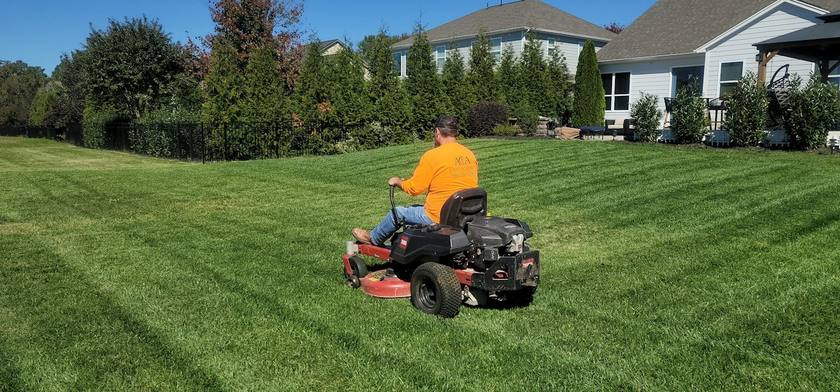
- A mower sized for your yards. A push mower can start a route of small yards; a commercial walk-behind or zero-turn speeds up larger ones.
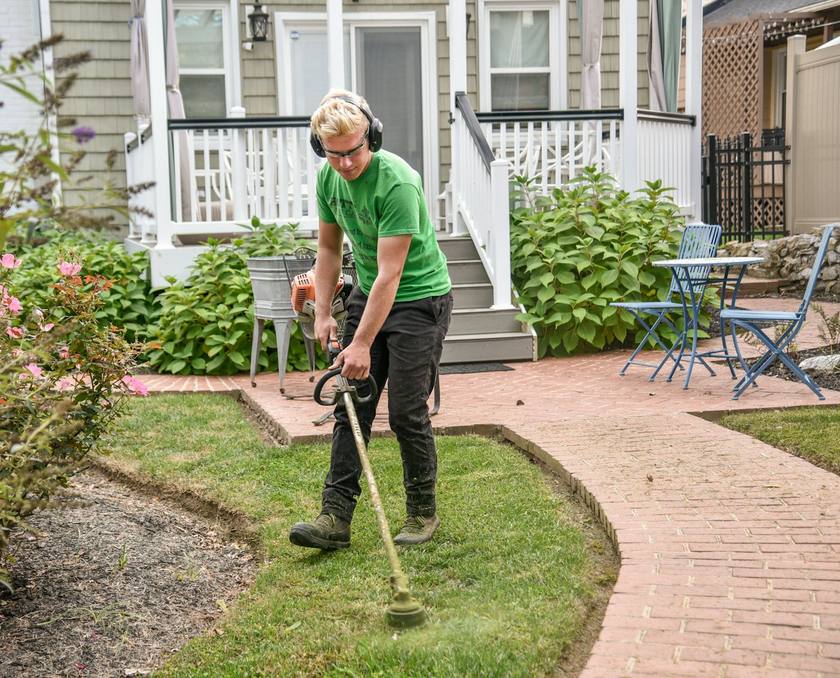
- String trimmer, edger and backpack or handheld blower.
- Hedge trimmer and hand tools: rakes, shovels, pruners.
- A trailer with ramps and secure storage, and a truck that can tow it.
- Fuel cans, spare blades, line, oil, filters.
- Safety gear: eye and hearing protection, gloves, boots.
- Later: aerator (or rent one), spreader, leaf vacuum.
Commercial-grade equipment costs more but lasts longer under daily use. Many owners start with good used equipment and replace it as the route grows.
6. Price each visit for profit
Build the price from your own costs: your time, a helper's time, fuel, equipment wear and replacement, insurance, overhead and profit. For a wage reference, the BLS May 2025 survey puts the national mean wage for landscaping and groundskeeping workers at $20.33 an hour, median $18.82 (bls.gov, series 37-3011, checked October 8, 2026).
Then compare with the market. LawnStarter's mowing price guide lists a national average of $44 to $71 per visit, with $57 typical, $41 to $61 for a lawn up to a quarter acre, and a typical minimum of about $30 (lawnstarter.com, checked October 8, 2026). Fixr lists aeration at $80 to $250 and leaf removal at $150 to $550 (fixr.com, checked October 8, 2026).
Set a minimum per stop, charge for overgrown first cuts, and price add-ons separately. Our guide to pricing lawn care works through an example, and the free profit margin calculator checks the margin. Koira measures lawns from satellite images and prices from your list, so a first number does not need a visit.
7. Build tight routes
- Pick a few neighborhoods and say no, or charge more, outside them.
- Mow the same streets on the same day each week.
- After every job, market to the neighbors. Koira mails cards to the 50 nearby homes most likely to hire you, with a photo from the job.
- Sort each day by the drive. Koira puts your stops in driving order and offers new customers times that fit the route.
8. Your first customers
- People you know and their neighbors. The first few yards on one street are worth a lot.
- Google. A Google Business Profile with your real name, services, service area and photos of striped lawns and clean edges. Ask every customer for a review. Our guide to SEO for landscapers covers it.
- A website with a price and booking. Koira builds one from your business on the free plan, with a page for every town you mow, and keeps your listings matching.
- Reviews. Koira asks an hour after the invoice is paid.
See how your business looks online with the free AI report.
9. Recurring customers and getting paid
Lawn care runs on repeat visits. Offer weekly and every-two-weeks service, ask for a card on file, and bill after each visit or monthly so nobody has to remember. Koira runs weekly and monthly service as a plan billed on the card on file and books the visits (Front Office plan). For one-off projects like cleanups and mulch, send a signed estimate; when you finish, the invoice goes out and the customer can pay by card or at the door. Koira's free Office plan includes estimates, invoices and card payments; on Office, Koira keeps 2% of each card payment, plus Stripe's processing. See pricing.
10. Your first helper and the off season
When the route is full, raise prices first, then hire. A helper means workers' compensation, payroll and a way to see who is where; Koira has no per-person fee. Use the off season to service equipment, sell next year's plans and send seasonal reminders for cleanups. For the wider steps, read how to start a home services business, and see how a lawn and landscape company runs on Koira.
Questions contractors ask
How much does it cost to start a lawn care business?
It depends on whether you buy new or used and how big your yards are. At minimum you need a mower, trimmer, blower, a way to haul them, insurance and registration. Price your own list with a local dealer and an insurance agent.
Do I need a license to start a lawn care business?
Usually a general business license for mowing. Pesticides are another matter: EPA says state pesticide regulatory agencies issue applicator certifications, and some states require certification for all commercial applicators. Check with your state's pesticide regulatory agency.
How much should I charge to mow a lawn?
Start from your own costs and minimum. For comparison, LawnStarter lists a national average of $44 to $71 per visit and $41 to $61 for a lawn up to a quarter acre, checked October 8, 2026.
How do I get lawn care customers?
Start with people you know and their neighbors, set up a Google Business Profile with photos and reviews, and put a price and booking on your website. Cards to the neighbors of every yard you mow help build tight routes.
Should I do weed control and fertilizing?
Only after you have whatever certification your state requires. Until then, mowing, cleanups, aeration and beds keep you busy.
How do I keep customers through the season?
Offer weekly or every-two-weeks service on the same day, with a card on file billed after each visit or monthly, and add seasonal services like cleanups.
What insurance does a lawn care business need?
General liability at minimum, plus commercial auto for the truck and trailer. The SBA says businesses with employees must carry workers' compensation, unemployment and disability insurance.